I used to just “hope” for a promotion, but things only changed when I started visualizing exactly what I wanted.
A career vision board works because it stops you from drifting.
It forces you to decide what your next move looks like, from the office layout to the size of your paycheck.
When you see your goals every morning, your brain starts looking for ways to make them happen.
It turns a vague wish into a real plan.
Who This List Is For
This list is for anyone who feels stuck in a rut or is ready to level up.
Whether you are a student looking for your first “real” job, a freelancer wanting more clients, or a corporate climber aiming for the corner office, there is something here for you.
If you are tired of just working for a weekend and want to build a career you actually love, you are in the right place.
How to Create a Career Vision Board

Choose one career direction
Before you glue anything down, pick a path.
I’ve made the mistake of trying to visualize five different careers at once, and it just leads to a messy mind.
Focus on the one version of your professional life that excites you most right now.
Whether you want to lead a team or launch a solo creative business, pick that specific lane.
This clarity makes it much easier to find the right images and stay on track.
Pick digital or physical
Decide where you want to see your goals.
I love a physical board because I can touch the textures and pin up real items like a business card or a printed “thank you” email.
However, a digital board is perfect if you want it as your laptop wallpaper or phone lock screen.
Both work great, but choose the one you will actually look at every single day.
If you don’t see it, you won’t use it.
Use job titles, workspaces, and milestones
Don’t be vague.
I find that placing a specific job title in a bold font right in the center of the board is a game-changer.
Surround it with photos of the office where you want to sit or the equipment you want to use.
Add milestones like “First $10k Month” or “Keynote Speaker.”
These details take your board from a pretty collage to a powerful roadmap that tells you exactly where you are headed.
1. Dream Job Title Vision
I used to feel shy about saying what I really wanted.
On my board, I finally typed out my “Dream Title” in a huge, bold font. It sits right in the middle where I can’t miss it.
Seeing those words, like “Director” or “Lead Designer” makes the role feel like it already belongs to you.
It stops being a “maybe” and starts being your new identity.
This simple step helps you act like the person who already has that job.
2. High-Paying Career Path

Let’s be real: we work to make a good living.
I like to use images of “Paid” invoices or a simple, rising line on a graph.
Don’t just think about the money; show what that money does.
Use a photo of a high-end laptop or a professional suit that makes you feel like a million bucks.
This section is about your value.
It reminds you that you are worth a high salary and gives you the courage to ask for it.
3. Promotion & Growth

Career growth is a ladder, not a jump.
I find it helpful to pin up a series of steps.
Maybe it’s a “Senior” tag or a photo of a larger desk.
I’ve even used a mock-up of an email from a boss saying, “You got the role!”
It helps you see the progress you are making.
When you hit a small goal, you can check it off and look at the next one.
It keeps you moving forward even on slow days.
4. Remote Work Lifestyle
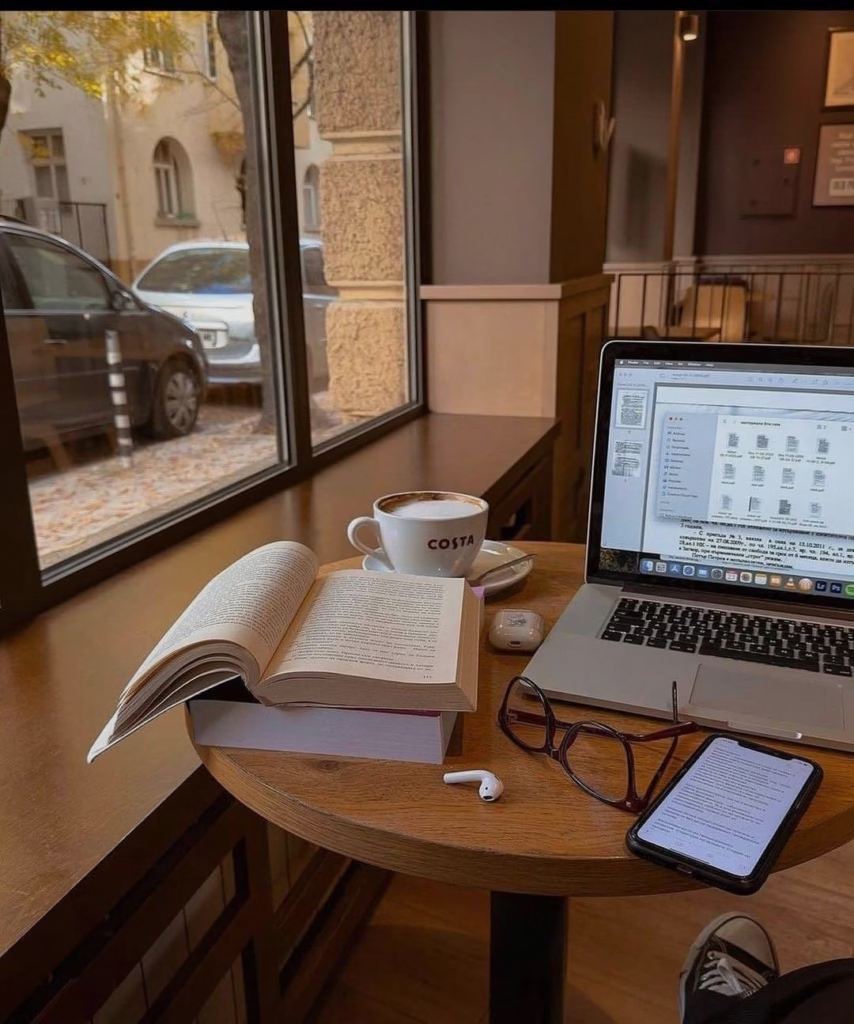
If you want to ditch the commute, this section is for you.
I fill mine with photos of a clean home office, a laptop on a balcony, or a person working in a quiet cafe.
It represents the freedom to choose your own view.
This vision reminds you why you are looking for flexible roles.
It focuses on the peace of mind that comes with a “work from anywhere” life, far away from a grey cubicle.
5. Corporate Success Aesthetic

There is a specific power in the corporate world.
I love using shots of sleek glass buildings, organized planners, and sharp blazers.
It feels like “Main Character” energy in the city.
If you want to climb the ladder, use photos that show big meetings or a high-rise view.
This board should make you feel like a pro who is ready to take on the boardroom.
It’s about looking and feeling the part.
6. Entrepreneur or Startup Vision

Building something from scratch is a wild ride.
I represent this with a “Grand Opening” sign or a photo of a team huddled around a whiteboard.
It’s about the “founder” mindset.
I find it useful to pin up a logo you’ve sketched or a picture of your first product.
This section keeps your fire burning when the hours are long.
It reminds you that you are building a legacy, not just working a job.
7. Creative Career Goals

For the artists and makers, your board should be a burst of color.
I include photos of studio spaces, cameras, or open sketchbooks.
It is about the “flow” of creating.
I’ve found that seeing other people’s finished work helps me stay inspired to finish mine.
This section isn’t about the money; it’s about the craft.
It reminds you to stay curious and keep making things that the world hasn’t seen yet.
8. Skill-Building & Learning Goals
You are your best asset.
I like to put up logos of certificates I want to earn or a stack of books on a new topic.
It shows that you are a “work in progress.”
I once used a photo of a person speaking a new language to remind me to keep practicing.
This part of the board celebrates the “student” in you.
It proves that you are willing to learn whatever it takes to get to the top.
9. Leadership & Authority Energy

Even if you aren’t the boss yet, you can lead from where you are.
I use images of people shaking hands or someone speaking at a podium.
It’s about the way you carry yourself.
Use words like “Impact” or “Influence.”
I find that seeing these images helps me speak up more in meetings.
It reminds you that your voice matters and that people are looking to you for the next great idea.
10. Personal Brand Growth
In today’s world, you are a brand.
I use images of a clean social media profile or a professional headshot.
Think about how you want the world to see you…I’ve even put up a mock-up of a personal website.
It helps you stay consistent with your message.
When you see your brand as something high-quality, you start to treat your career with a lot more respect and care.
11. Networking
Success is often about who you know.
I like to use photos of people chatting at a bright event or a “New Connection” notification.
It makes the idea of meeting strangers feel less scary.
Pin up the logo of a club or a group you want to join.
This section reminds you that one conversation can change your life.
It encourages you to reach out, say hello, and open new doors.
12. Work-Life Balance Goals

A career shouldn’t cost you your life.
I represent this with a photo of a laptop being closed at 5:00 PM sharp.
Use images of a sunset walk or a family dinner where no one is looking at a phone.
It is a visual boundary.
When I see this, I remember that I work to live, not the other way around.
It helps you stay productive during the day so you can truly “switch off” at night.
13. Career Opportunities

The world is huge, and your career can take you anywhere.
I love using photos of passport stamps or a view from an office in a city like London or Tokyo.
Maybe it’s a picture of a suitcase next to a business suit.
This section is for the dreamers who want to work abroad.
It reminds you that your skills are valuable in any language and keeps you excited about the global stage.
14. Career Confidence
This is all about the “inner” game.
I use short, punchy quotes like “I belong here” or “Expert in the making.”
I’ve found that seeing these words helps me beat imposter syndrome.
Use photos of people looking calm under pressure.
This part of the board is your cheerleader.
It reminds you that you have the talent and the right to be in the room, even when things get tough.
15. Productivity & Discipline Focus
Big wins come from boring habits.
I use images of a tidy desk, a ticking clock, or a deep-work timer.
When I look at this, it makes me want to put my phone away and focus.
It turns the idea of “discipline” into something that looks rewarding and clean.
It’s about being the person who actually gets things done.
16. Side Hustle to Main Income
This is for the person ready to quit their 9-to-5.
I like to use a “Bridge” metaphor or a photo of a home office getting an upgrade.
Use a simple chart that shows your side income growing.
Seeing this every day gives you the “push” to keep working on your own thing after your day job ends.
It is a reminder that your small project is slowly becoming a big reality.
17. Industry-Specific Success Board
Every field has its “gold standard.”
If you’re a chef, it’s a Michelin star; if you’re a writer, it’s a book cover.
I use the specific symbols of my industry to stay focused.
Put up photos of the best people in your field doing what they do best.
It gives you a clear target to aim for.
This section shows that you aren’t just working; you are mastering your specific craft.
18. Professional Image
How do you want to “show up”?
I fill this with photos of high-quality clothes, a firm handshake, or a person with great posture.
It is about your “vibe.”
I’ve found that when I visualize myself looking professional, I actually start to act more professional.
This isn’t about being fake…it’s about dressing and acting for the level of success you want to reach.
19. Long-Term Career Legacy

Think about what you want to be known for when you retire.
I use images that represent “Impact” or “Mentorship.”
Maybe it’s a photo of a person teaching a group or a scholarship with your name on it.
This section keeps you from getting caught up in small, daily stresses.
It reminds you to build something that lasts and to be a person who helps others rise up, too.
20. “Future Me at Work”
This is like a “day in the life” of your future self.
I use photos that show a specific routine…
Like a morning meeting followed by a creative lunch.
It makes the goal feel very “real” and reachable.
It’s not just a dream; it’s a Tuesday three years from now.
When you can see the details of your future workday, it becomes much easier to take the steps to get there.
21. Career Freedom & Flexibility
The ultimate goal for many is just to have a choice.
I represent this with an open calendar or a person working from a park bench.
Use words like “Autonomy” or “Freedom.”
This section is a reminder that you are working toward a life where you call the shots.
It keeps you motivated to build a career that fits your life, rather than forcing your life to fit your career.